


Russia on Friday announced it was pulling out of the Open Skies treaty, saying that the pact, which allows unarmed surveillance flights over member countries, had been seriously compromised by the withdrawal of the United States. The move, announced by Russia’s foreign ministry, comes days before U.S. President-elect Joe Biden’s Jan. 20 inauguration amid fears of a burgeoning arms race. Moscow’s last major nuclear arms pact with Washington is set to expire next month. The United States left the Open Skies arms control and verification treaty in November, accusing Russia of violating it, something Moscow denied.
Russia said in a statement that Moscow had made specific proposals to other members to mitigate against the impact of the U.S. exit but that those proposals were not backed by Washington’s allies. Moscow will formally notify other member states about its exit once it has completed unspecified withdrawal procedures at home, it said. The exit process usually takes months to be finalised, just for knowledge if you don’t know what is open treaty skies
WHAT IS THE OPEN SKIES TREATY..!?
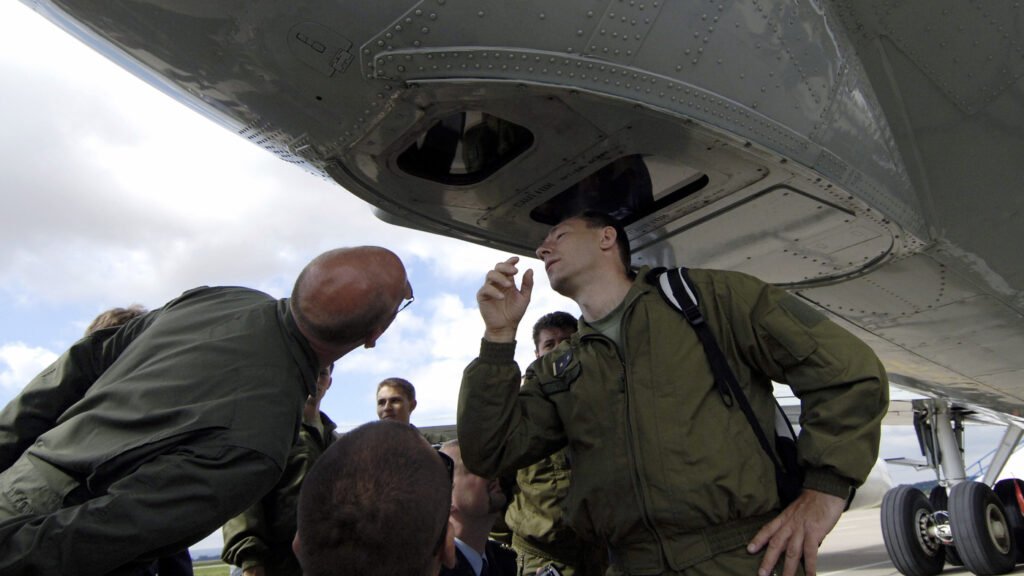
First proposed in 1955 by former US President Dwight Eisenhower as a means to deescalate tensions during the Cold War, the landmark treaty was eventually signed in 1992 between NATO members and former Warsaw Pact countries following the demise of the Soviet Union. It went into effect in 2002 and had 35 signatories, including key players US and Russia, along with one non-ratifying member (Kyrgyzstan).
The OST aims at building confidence among members through mutual openness, thus reducing the chances of accidental war. Under the treaty, a member state can “spy” on any part of the host nation, with the latter’s consent. A country can undertake aerial imaging over the host state after giving notice 72 hours before, and sharing its exact flight path 24 hours before.
The information gathered, such as on troop movements, military exercises and missile deployments, has to be shared with all member states. Only approved imaging equipment is permitted on the surveillance flights, and officials from the host state can also stay on board throughout the planned journey.
Despite of many advantages Russia has raised concerns that despite leaving the treaty Washington could potentially retain access to overflight intelligence gathered by allies who remain members in the treaty. The Kommersant newspaper reported earlier that Moscow had tried to get guarantees from other countries that they would not share such intelligence with Washington but had not been given any assurances. As per a report in The New York Times, US President Donald Trump was also unhappy that a Russian reconnaissance flew over his golf course in New Jersey state in 2017.
In May 2020, the Trump administration announced its intention of withdrawing from the OST, accusing Russia of “flagrantly and continuously violating the Treaty in various ways for years”, and left it in November that year. Arms control tensions have been rising between Moscow and Washington and New Start, their last remaining major nuclear arms control treaty, is set to expire in February. Biden has said he’s keen to renew it but it remains unclear for how long.
WHAT HAPPENS NOW THAT BOTH THE US AND RUSSIA ARE OUT?
The failure of the Open Skies Treaty follows the demise of another significant arms control accord, the Intermediate-Range Nuclear Forces (INF) Treaty, after both the US and Russia left it in 2019. The INF Treaty was signed between the United States and the Soviet Union in 1987, in which both powers agreed to destroy two categories of lethal missile systems from their own stocks as a means to decelerate the nuclear arms race.
Experts now worry about the fate of the much larger US-Russia ‘New START’ nuclear arms control agreement, which is slated to expire on February 5, 2021. US president-elect Joe Biden, who takes office on January 20, has spoken in favour of preserving the treaty, as opposed to outgoing President Trump, who did not want to renew it unless China too was made part. Despite Biden’s willingness, however, there are apprehensions that negotiations with Russia would not be completed before the February deadline.
Checkout more such content at: https://gogomagazine.in/category/social/





4