


When people get a cold or the flu, they tend to experience a lack of energy. But what if viruses could actually generate energy — not to power your body, but to charge your electronic devices?
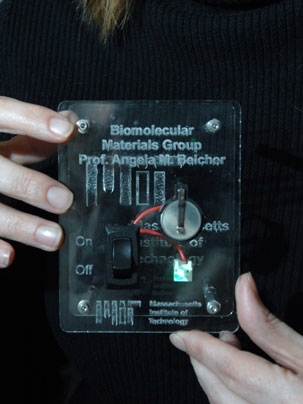
IN 2009, MIT bioengineering professor Angela Belcher traveled to the White House to demo a small battery for President Barack Obama, who was just two months into his first term in office. There aren’t many batteries that can get an audience with the leader of the free world, but this wasn’t your everyday power pouch. Belcher had used viruses to assemble a lithium-ion battery’s positive and negative electrodes, an engineering breakthrough that promised to reduce the toxicity of the battery manufacturing process and boost their performance. Obama was preparing to announce $2 billion in funding for advanced battery technology, and Belcher’s coin cell pointed to what the future might hold in store.

The scientists are exploiting a principle known as piezoelectricity — the generation of energy through mechanical stress, specifically pressure or vibrations. Piezoelectricity was first identified more than 130 years ago and is used in many common devices, but this is the first time that it has been generated by biological materials. The piezoelectric devices that are currently on the market rely upon toxic materials such as lead and lithium.
A decade after Belcher demoed her battery at the White House, her viral assembly process has rapidly advanced. She’s made viruses that can work with over 150 different materials and demonstrated that her technique can be used to manufacture other materials like solar cells. Belcher’s dream of zipping around in a “virus powered car ” still hasn’t come true, but after years of work, she and her colleagues at MIT are on the cusp of taking the technology out of the lab and into the real world.
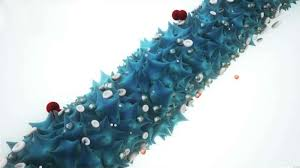
In a traditional lithium-ion battery, lithium ions flow between a negatively charged anode, usually graphite, and the positively charged cathode, usually cobalt oxide or lithium iron phosphate. Three years ago, an MIT team led by Belcher reported that it had engineered viruses that could build an anode by coating themselves with cobalt oxide and gold and self-assembling to form a nanowire.
In the latest work, the team focused on building a highly powerful cathode to pair up with the anode, said Belcher, the Germeshausen Professor of Materials Science and Engineering and Biological Engineering. Cathodes are more difficult to build than anodes because they must be highly conductive to be a fast electrode, however, most candidate materials for cathodes are highly insulating (non-conductive).
Because the viruses recognize and bind specifically to certain materials (carbon nanotubes in this case), each iron phosphate nanowire can be electrically “wired” to conduct carbon nanotube networks. Electrons can travel along the carbon nanotube networks, percolating throughout the electrodes to the iron phosphate and transferring energy in a very short time.
The viruses are a common bacteriologic, which infect bacteria but are harmless to humans.
As nature’s microscopic zombies, viruses straddle the divide between the living and the dead. They are packed full of DNA, a hallmark of all living things, but they can’t reproduce without a host, which disqualifies them from some definitions of life. Yet as Belcher demonstrated, these qualities could be adopted for nanoengineering to produce batteries that have improved energy density, lifetime, and charging rates that can be produced in an eco-friendly way.
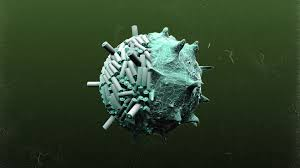
Belcher’s virus of choice is the M13 bacteriophage, a cigar-shaped virus that replicates in bacteria. Although it’s not the only virus that can be used for nanoengineering, Belcher says it works well because its genetic material is easy to manipulate. To conscript the virus for electrode production, Belcher exposes it to the material she wants it to manipulate. Natural or engineered mutations in the DNA of some of the viruses will cause them to latch on to the material. Belcher then extracts these viruses and uses them to infect a bacterium, which results in millions of identical copies of the virus. This process is repeated over and over, and with each iteration, the virus becomes a more finely-tuned battery architect.
Nature has found plenty of ways to build useful structures out of inorganic materials without the help of viruses. Belcher’s favorite example is the abalone shell, which is highly structured at the nanoscale, lightweight, and sturdy. Over the process of tens of millions of years, the abalone evolved so that its DNA produces proteins that extract calcium molecules from the mineral-rich aquatic environment and deposit it in ordered layers on its body. The abalone never got around to building batteries, but Belcher realized this same fundamental process could be implemented in viruses to build useful materials for humans.
The team found that incorporating carbon nanotubes increases the cathode’s conductivity without adding too much weight to the battery. In lab tests, batteries with the new cathode material could be charged and discharged at least 100 times without losing any capacitance. That is fewer charge cycles than currently available lithium-ion batteries, but “we expect them to be able to go much longer,” Belcher said.
Now that the researchers have demonstrated they can wire virus batteries at the nanoscale, they intend to pursue even better batteries using materials with higher voltage and capacitance, such as manganese phosphate and nickel phosphate, said Belcher. Once that next generation is ready.
When Belcher first suggested that these DNA-driven assembly lines might be harnessed to build useful things for humans, she encountered a lot of skepticism from her colleagues. “People told me I was crazy,” she says. The idea no longer seems so far-fetched, but taking the process out of the lab and into the real world has proven challenging. “Traditional battery manufacturing uses inexpensive materials and processes, but engineering viruses for performance and solving scalability issues will require years of research and associated costs,” says Bogdan Dragnea, a professor of chemistry at Indiana University Bloomington. “We have only recently started to understand the potential virus-based materials hold from a physical properties perspective.”
Checkout more such content at: https://gogomagazine.in/category/tech/





4.5
5
1